
September Highway Marker
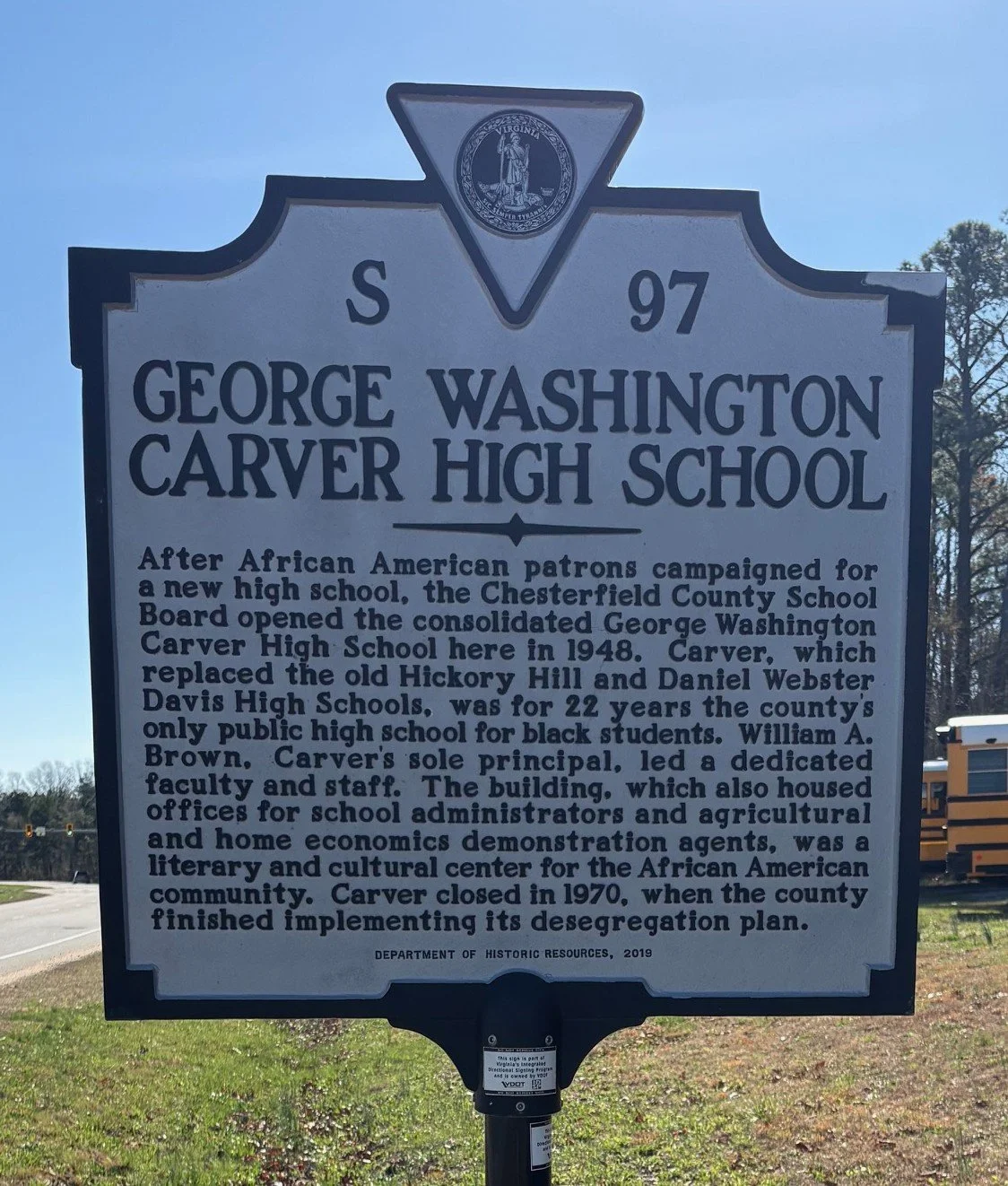
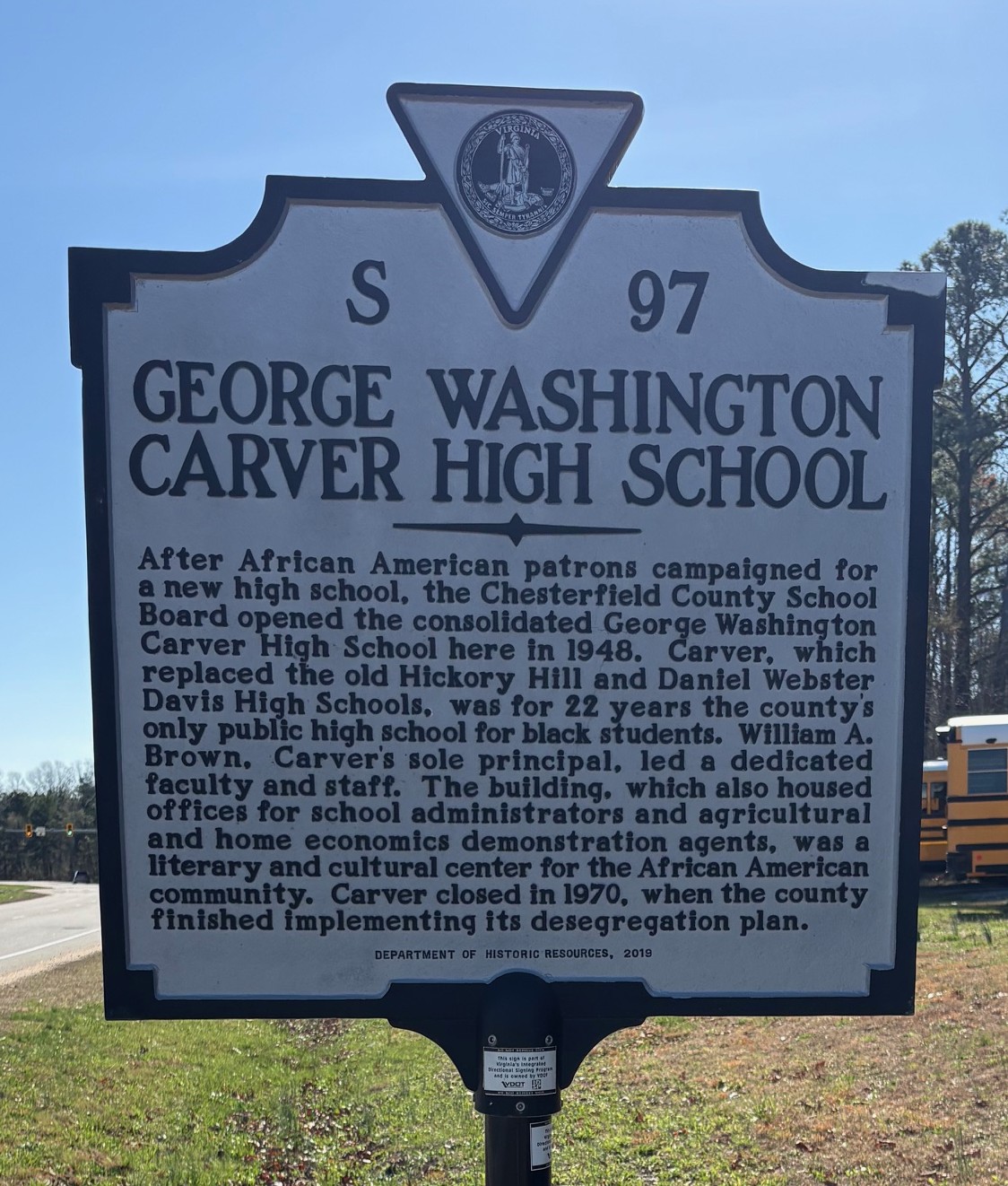
August’s DHR Highway Marker is Marker S-97, commemorating George Washington Carver High School, the only high school that Black students in Chesterfield County could attend from 1948 to 1970 due to racial segregation.

Hickory Hill High School Last Commencement 1948, Accession Number 96.69, CHSV. Hickory Hill High School was one out of two schools for African Americans in Chesterfield County, and closed in 1948 before George Washington Carver High School opened the same year.
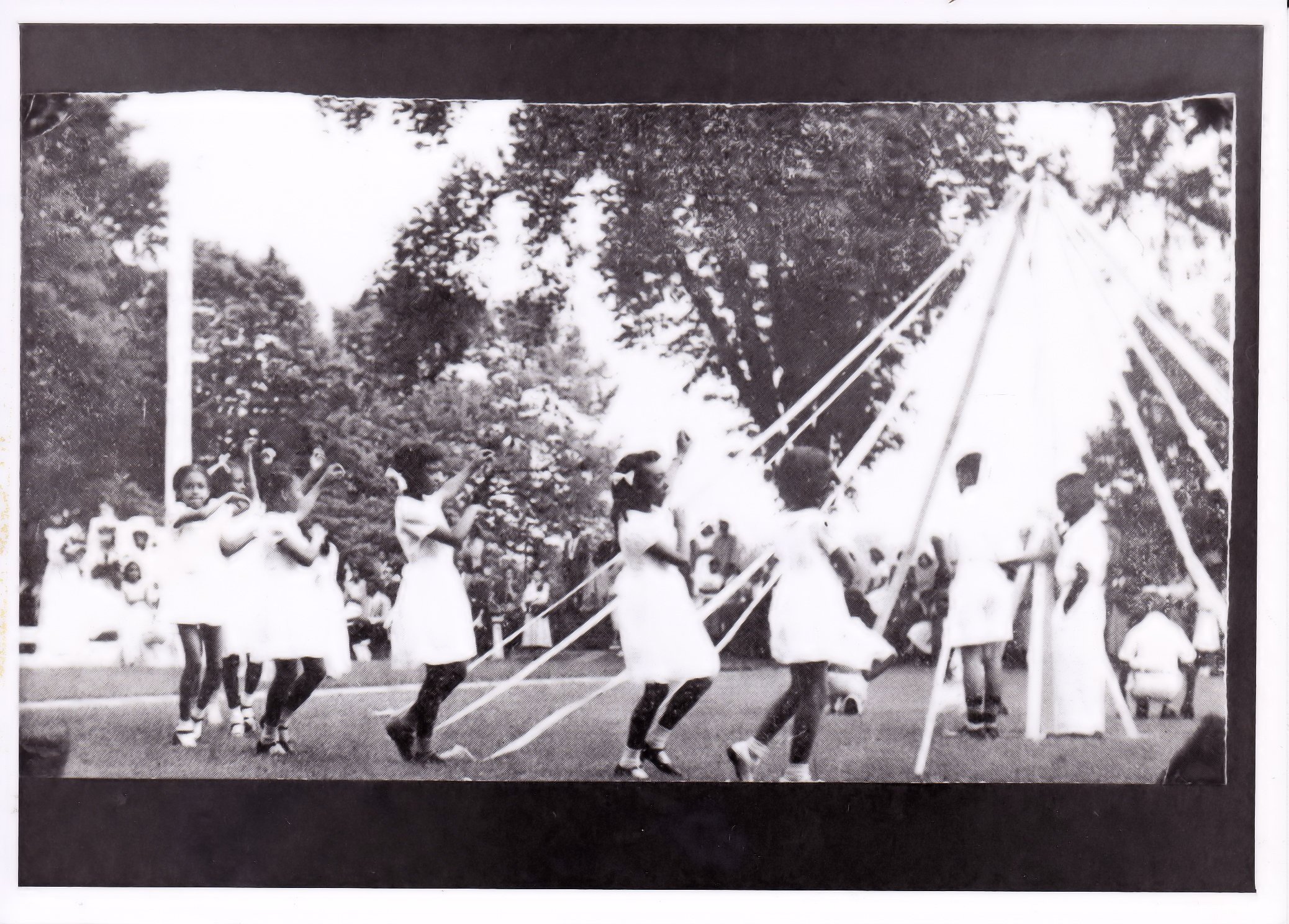
Hickory Hill High School Maypole Dancing, Accession Number 96.75, CHSV
Visit CHSV at Historic Trinity Church to see our African American History Committee’s exhibit about segregated schools—including George Washington Carver High School!
August’s DHR Highway Marker is Marker S-97, commemorating George Washington Carver High School, the only high school that Black students in Chesterfield County could attend from 1948 to 1970 due to racial segregation. After an active campaign to improve Black high schools in the county, George Washington Carver High School admitted its first class of 347 on September 8, 1948, replacing the Hickory Hill and Daniel Webster Davis schools. Students from all over the county would travel miles to Chester to pursue their education and develop a strong sense of community that flourished under principal William Albert “W.A.” Brown. The George Washington Carver High School building remained standing after 1970 and today hosts the Carver College & Career Academy. Historical marker S-97 in Chester, Chesterfield County, was unveiled in 2019 and commemorates George Washington Carver High School in front of its original building.
Text from Marker S-97:
After African American patrons campaigned for a new high school, the Chesterfield County School Board opened the consolidated George Washington Carver High School here in 1948. Carver, which replaced the old Hickory Hill and Daniel Webster Davis High Schools, was for 22 years the county's only public high school for black students. William A. Brown, Carver’s sole principal, led a dedicated faculty and staff. The building, which also housed offices for school administrators and agricultural and home economics demonstration agents, was a literary and cultural center for the African American community. Carver closed in 1970, when the county finished implementing its desegregation plan.
Read more about George Washington Carver High School in these articles:
https://richmondmagazine.com/news/richmond-history/a-place-of-kinship/
https://www.progress-index.com/story/news/2016/04/06/school-hosts-dedication-ceremony/32012421007/
Image Credits:
Chesterfield Historical Society of Virginia
August Highway Marker
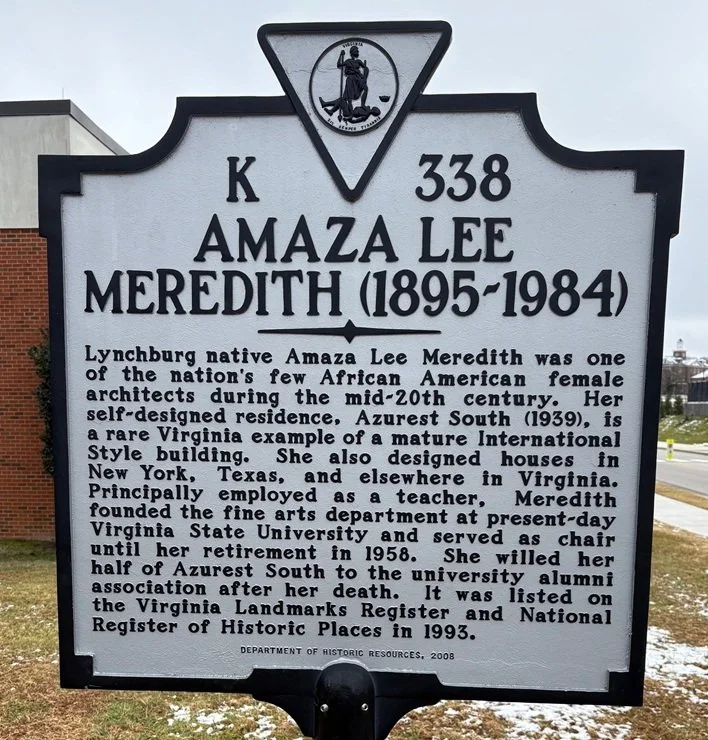
August’s DHR Highway Marker is Marker K-338, commemorating Amaza Lee Meredith (1895-1984), who was born on August 14, 1895 in Lynchburg, Virginia.
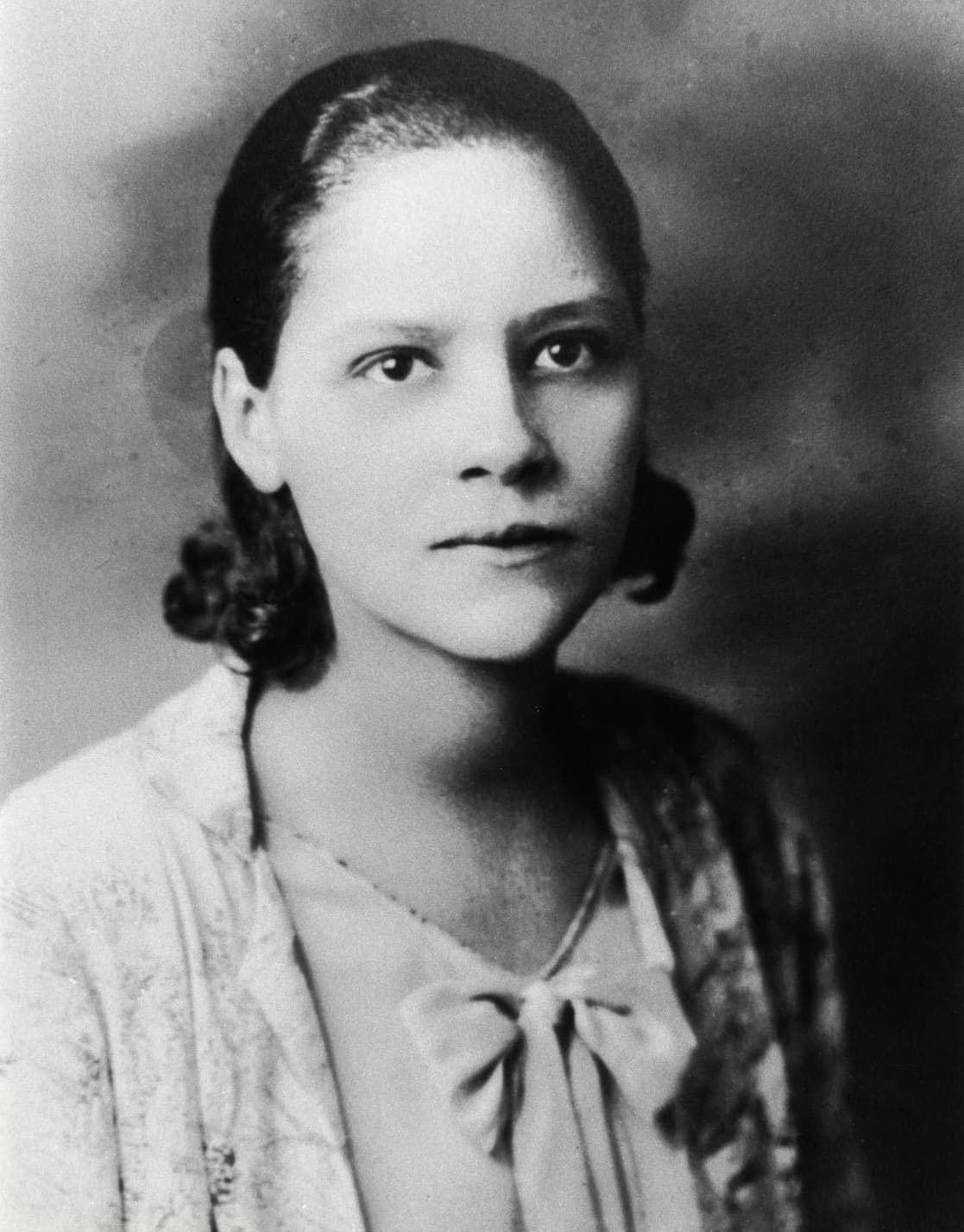
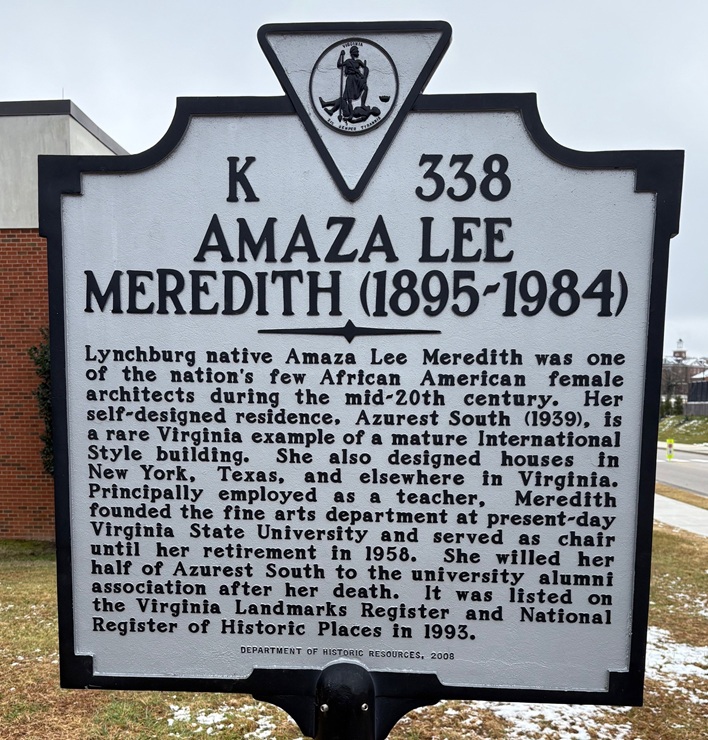
August’s DHR Highway Marker is Marker K-338, commemorating Amaza Lee Meredith (1895-1984), who was born on August 14, 1895 in Lynchburg, Virginia.
Amaza Lee Meredith was an accomplished African American, female, and queer architect who founded and chaired Virginia State University's fine arts department. Historical marker K-338 in Ettrick, Chesterfield County, commemorates Lee Meredith in front of VSU's Alumni House.
Text from Marker K-338:
Lynchburg native Amaza Lee Meredith was one of the nation's few African American female architects during the mid-20th century. Her self-designed residence, Azurest South (1939), is a rare Virginia example of a mature International Style building. She also designed houses in New York, Texas, and elsewhere in Virginia. Principally employed as a teacher, Meredith founded the fine arts department at present-day Virginia State University and served as chair until her retirement in 1958. She willed her half of Azurest South to the university alumni association after her death. It was listed on the Virginia Landmarks Register and National Register of Historic Places in 1993.
Read more about Lee Meredith in these articles:
https://pioneeringwomen.bwaf.org/amaza-lee-meredith/
https://news.vcu.edu/article/2025/01/remembering-amaza-lee-meredith-the-groundbreaking-architect
Image Credits: